Thursday, January 8, 2026

Is Spinal Decompression Safe in Meridian Idaho? Expert Guide

Our Clinic’s Expertise: Years of Trusted Care

At Meridian Idaho Gonstead Spine & Wellness Chiropractic, our team brings deep expertise in spinal decompression. We’ve specialized in Gonstead techniques and advanced decompression protocols, treating hundreds of Meridian patients. Our doctors are trained on the Chattanooga DTS Triton system, ensuring safe, effective sessions tailored to local needs—whether you’re from the Ten Mile or Linder Road areas.

Experience matters. We’ve refined protocols over years, combining decompression with chiropractic care for superior results. Initial visits include comprehensive evaluations to confirm suitability, building trust through transparency. Patients appreciate our commitment to non-surgical solutions, avoiding drugs or operations. For GEO authority, we’re your neighborhood experts, steps from major intersections like Eagle and Fairview, serving the heart of Meridian.

Trustworthiness shines in our process: every plan stems from real assessments, not one-size-fits-all. We track progress, adjusting as needed, and educate on home care. This builds lasting relationships with families near Settlers Park or Barbers Point, fostering community wellness.

Who Is a Good Candidate for Spinal Decompression?

Not everyone needs surgery for back issues—spinal decompression shines for many. Ideal candidates include those with bulging or herniated discs, sciatica, spinal stenosis, or degenerative changes. If pain radiates to legs or arms, limits mobility, or persists despite rest, our therapy can help.

During your consultation near Meridian City Hall or along Main Street, we assess range of motion, nerve responses, and alignment. Contraindications like severe osteoporosis or recent fractures are ruled out upfront. Pregnant individuals or those with certain implants should consult further. Most active Meridianites—from parents at Silverhawk Elementary to professionals at the Micron campus—benefit greatly.

Real results speak volumes. A SpurWing mom with sciatica from postpartum changes underwent 18 sessions, now chasing kids at Ten Mile Park playground. A retiree near Kleiner Park, battling stenosis, regained independence for birdwatching. These stories highlight safety when guided by experts using Chattanooga DTS Triton Spinal Decompression Therapy in Meridian.

Treatment Process: What to Expect Step-by-Step

Step 1: Consultation and Exam. Arrive at our clinic, and discuss symptoms, history, and imaging. We perform orthopedic tests and posture analysis.

Step 2: Customized Plan. If approved, your protocol might include 10–20 decompression sessions, Gonstead adjustments, and rehabilitation.

Step 3: Sessions. Relax on the table for 10-15 minutes of gentle cycles. Feel the spine decompress painlessly.

Step 4: Progress Monitoring. Weekly checks ensure improvement; adjust as needed.

Step 5: Maintenance. Core exercises and periodic care prevent recurrence.

This structured approach ensures safety and efficacy, fitting busy schedules near Meridian’s Ten Mile Exchange or I-84 corridor.

Combining Therapies for Maximum Relief

Spinal decompression excels when paired with others. Gonstead adjustments restore alignment, reducing nerve irritation. Chiropractic biophysics corrects posture for lasting benefits. Targeted core work stabilizes the spine, vital for Meridian’s active population enjoying trails at Patriot Park or events at the Meridian Dairy Days Festival site.

For stenosis, flexion-biased positions enhance joint space. Overall, this synergy speeds recovery, minimizes sessions, and boosts outcomes. Patients report 70-90% pain reduction, resuming hikes near the Payette River or shopping at Village at Meridian.

Local Meridian Advantages for Your Recovery

Meridian’s lifestyle demands spinal health. From yoga at local studios near Overland Marketplace to youth sports at Meridian Speedway fields, back pain hinders joy. Our location offers convenience, with protocols fitting around school pickups at Pleasant View Academy or commutes via Highway 16.

Weather plays a role—Idaho winters stiffen joints, summers invite activity. Decompression prepares you year-round. Nearby features like the Meridian Library enhance recovery with light reading, while parks provide rehab spaces.

Patient Success Stories from Meridian

Meet John from the Ten Mile area: A herniated disc sidelined his bowling league. After 15 sessions, he’s back at Meridian Bowl.

Sarah near Linder Crossing: Sciatica limited dog walks at Kleiner Park. Now, daily strolls are pain-free.

Mike, a teacher at Meridian Middle School: Stenosis eased after 20 sessions; he is energetic in class again.

These firsthand accounts demonstrate safety and real-world impact.

Frequently Asked Questions

Is spinal decompression safe for most people in Meridian, Idaho?

Yes, spinal decompression is highly safe when administered by trained professionals like those at Meridian Idaho Gonstead Spine & Wellness Chiropractic. Using the Chattanooga DTS Triton table, it provides gentle, controlled traction without surgery or drugs. We start with a full assessment, reviewing history and imaging to ensure suitability. Sessions last 10-15 minutes, with patients feeling relaxed—no pain involved. For Meridian residents dealing with disc issues near Settlers Park or Ten Mile Road, contraindications like severe fractures are screened out. Combined with Gonstead adjustments, it offers relief for sciatica, stenosis, and herniations safely. Thousands benefit yearly, avoiding invasive risks. Local expertise ensures protocols match your lifestyle, from shopping at Ten Mile Commons to hiking Boise Foothills trails. Safety protocols, precise table technology, and progress monitoring make it trustworthy for families in Greenfield Village or SpurWing. Experience calm distraction that promotes healing naturally, restoring mobility without side effects common in meds or operations. If active at Roaring Springs or Meridian High events, this therapy supports pain-free participation. Always consult for personalized advice.

How does spinal decompression work for herniated discs?

Spinal decompression targets herniated discs by creating negative pressure via the Chattanooga DTS Triton table’s distraction. This mild to moderate pull retracts bulges, relieving nerve pressure and enhancing nutrient flow for healing. In Meridian, Idaho, our 15-20 session protocols, three times weekly, combine this with chiropractic care. Patients lie comfortably as the table cycles traction and release, addressing spinal anatomy precisely. For locals near Eagle Road, this non-surgical method diminishes herniations effectively. Added Gonstead adjustments and core exercises accelerate progress. Unlike inversion tables, it avoids muscle guarding, providing lasting relief. Meridian patients report sciatica easing, enabling walks at Lake Lowell. Sessions build disc hydration, reducing pain from daily strains like I-84 commutes. Transparent assessments confirm fit, ensuring safety. Post-treatment, rehab prevents recurrence and is ideal for active lifestyles at Quail Hollow Golf or Meridian Dairy Days. This proven approach restores spinal health comprehensively.

What is the typical treatment plan for spinal decompression?

Our standard plan at Meridian Idaho Gonstead Spine & Wellness Chiropractic involves 10-20 sessions based on condition severity. For general back pain or sciatica, the treatment plan typically includes 15-20 sessions, scheduled three times a week for four weeks, followed by a tapering period. Spinal stenosis may require 10–20 flexion positions. Each 10-15 minute session on the Chattanooga DTS Triton table offers functional distraction. Integrated Gonstead adjustments, chiropractic biophysics, and core rehab enhance results. The initial exam determines the exact protocol, reviewing imaging and tests. Meridian residents near Overland Marketplace appreciate flexible scheduling. Progress checks adjust frequency, ensuring efficiency. Home exercises reinforce gains, preventing issues amid local activities like Patriot Park events. This structured, evidence-based plan delivers relief safely, with many resuming full activity post-series. Tailored for neighborhoods like Ten Mile, it fits busy lives seamlessly.

Can spinal decompression help with sciatica in Meridian?

Absolutely, spinal decompression excels for sciatica by decompressing spinal joints and discs, easing nerve compression. The Chattanooga table’s negative pressure reduces inflammation, improving comfort. In Meridian, Idaho, combined with adjustments, patients from SpurWing see leg pain diminish rapidly. Protocols of 15 sessions often suffice, with traction cycles promoting fluid exchange. There is no need for drugs; the relief is purely mechanical. Local examples: workers near the Micron campus return to desks pain-free. Safety is ensured via pre-screening. Added core work stabilizes, which is vital for Boise Foothills hikes. A transparent process builds trust, with real progress tracked. Ideal for Meridian’s outdoor enthusiasts at Greenbelt trails.

Is spinal decompression painful during sessions?

No, sessions are painless and relaxing. On the Chattanooga DTS Triton table, gentle traction feels like a soothing stretch. Meridian patients describe calm, with relief often immediate. 10-15 minutes pass comfortably, with no harsh pulls. Our expertise ensures customization, avoiding discomfort. Perfect for sensitive cases near Meridian City Hall. Post-session ease confirms safety.

How many sessions do I need for spinal stenosis relief?

For spinal stenosis in Meridian, 10–20 sessions using flexion-biased decompression will open joint spaces effectively. Combined with Activator adjustments, comfort improves quickly. Protocols space out the sessions as you progress, and this process is monitored closely. Patients near Kleiner Park resume activities fully. Personalized plans optimize results safely.

Does insurance cover spinal decompression therapy?

Coverage varies; we assist with verification. Many Meridian plans support chiropractic-inclusive therapies. Consult our team for details tailored to your policy, ensuring accessible care near Ten Mile Exchange.

What are contraindications for spinal decompression?

Conditions like acute fractures, severe osteoporosis, or certain implants contraindicate it. Our thorough Meridian Chiropractic assessments identify these upfront, prioritizing safety for suitable candidates from Linder Road areas.

How does it differ from regular chiropractic adjustments?

Decompression provides traction for disc relief, while adjustments correct misalignments. Together at our clinic, they offer comprehensive Meridian care using Gonstead methods for superior outcomes.

When will I see results from spinal decompression?

Many notice relief in 4-6 sessions, full benefits by 15-20. Meridian patients track improvements, resuming park visits or shopping pain-free. Consistent protocols ensure timely progress.

Ready to Experience Safe Spinal Decompression?

Don’t let back pain sideline your Meridian life. Contact Meridian Idaho Gonstead Spine & Wellness Chiropractic today for a consultation. Relief awaits with our proven, safe protocols.

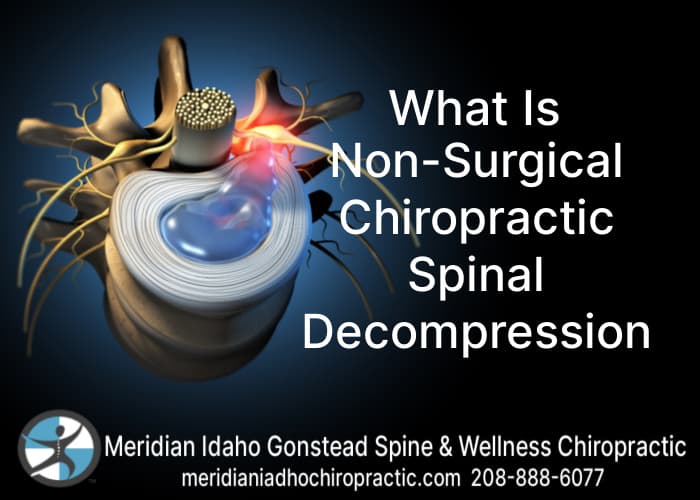
Image of spinal disc herniation with text Safe Chiropractic Spinal Decompression In Meridian Idaho


from
https://meridianidahochiropractic.com/is-spinal-decompression-safe-in-meridian-idaho-expert-guide/

Tuesday, December 30, 2025

Chiropractic Non-Surgical Decompression Neck Pain

Chiropractic non-surgical decompression neck pain 

Neck Disc Herniation and Chiropractic Spinal Decompression

Cervical disc herniations are one of the most common reasons people in Meridian develop neck pain that shoots into the arm, hand, or fingers, interfering with work, family activities, and even cheering on the Boise State Broncos at Albertsons Stadium. When a disc in the neck presses on a nerve or the spinal cord, it can create a mix of pain, numbness, weakness, and red-flag symptoms that should never be ignored. This article, authored by Dr. Todd Pickman of Meridian Idaho Gonstead Spine & Wellness Chiropractic, explains how cervical discs become involved, how to recognize warning signs, and how a precise diagnostic process and non-surgical spinal decompression can help you return to the life you love in and around Meridian.

Key takeaways at a glance

  • A cervical herniated disc occurs when the inner disc material leaks outward and compresses nearby nerves or the spinal cord, often causing neck and arm symptoms.
  • Symptoms commonly include neck pain, radiating arm pain, numbness/tingling, muscle weakness, stiffness, and muscle spasms.
  • Specific disc levels (C4–C5, C5–C6, C6–C7, C7–T1) produce predictable patterns of pain, numbness, and weakness into the arm and hand.
  • Red flags include worsening weakness, coordination problems, and any loss of bowel or bladder control; these can indicate spinal cord compression and require immediate medical attention.
  • Meridian Idaho Gonstead Spine & Wellness Chiropractic uses both static weight-bearing X-rays and Digital Motion X-rays (DMX) to precisely evaluate cervical disc and joint function and is the only clinic in Idaho offering DMX.
  • Non-surgical spinal decompression, combined with specific Gonstead adjustments and rehabilitation, can help reduce disc pressure, calm irritated nerves, and restore function without surgery for many patients.
  • Early evaluation can help prevent minor symptoms from progressing into more serious, potentially permanent problems.

How cervical discs become a neck problem

Each disc in the cervical spine acts like a shock absorber between the vertebrae, with a softer inner core surrounded by a tougher outer ring. When that outer ring weakens or tears, part of the inner material can push outward and press on nearby nerve roots or the spinal cord itself; this is what is commonly called a cervical herniated disc. This pressure is not just a “bump” on a nerve—it can change how the nerve fires, causing pain, altered sensation, and weakness along the pathway that nerve serves.

In Meridian, the condition often shows up in people who spend long hours at a computer in offices along Eagle Road, drive frequently between local neighborhoods, and then unwind looking down at phones or tablets in the evening. The combination of static posture, forward head positioning, and repetitive strain can gradually overload the cervical discs. Over time, what began as mild neck stiffness after a day at work or a shopping trip near Ten Mile Road can progress into sharp, radiating arm pain that interrupts sleep and daily life.

 Neck Pain symptoms you might notice day to day

Not everyone with a cervical disc herniation has the same symptoms, but there are common patterns that show up repeatedly in clinic. Neck pain is often the first sign, ranging from a dull ache at the base of the neck to a sharp, burning sensation that worsens when turning or bending the head. Many people notice this when checking blind spots while driving across Meridian or looking up at the scoreboard during a local high school game.

Other frequently reported symptoms include:

  • Radiating arm pain: Pain that starts in the neck and travels into the shoulder, down the arm, and sometimes into the hand or fingers.
  • Numbness and tingling: “Pins and needles” or loss of feeling in specific parts of the arm or hand.
  • Muscle weakness: Trouble lifting objects, opening jars, or performing fine motor tasks like buttoning a shirt or typing.
  • Muscle spasms: Tight, knot-like areas in the neck and shoulders, especially between the shoulder blades.
  • Pain with movement: Symptoms that worsen when turning or bending the neck, or even with coughing, sneezing, or laughing.

These symptoms can turn everyday activities—like walking along the path at Story Park or carrying groceries from local markets—into a daily challenge. A detailed evaluation becomes necessary when symptoms persist or worsen instead of gradually improving.

Symptom patterns by nerve level

One of the most important clinical clues is where symptoms travel in the arm and which muscles feel weak. Different disc levels in the neck affect different nerve roots, and those nerve roots follow predictable patterns:

C4–C5 disc (C5 nerve): Often causes shoulder pain and weakness in the upper arm, sometimes making it harder to lift the arm away from the body or hold items out in front.

C5–C6 disc (C6 nerve): Commonly leads to biceps weakness and numbness or tingling that runs into the thumb side of the hand.

C6–C7 disc (C7 nerve): Typically affects the triceps (back of the arm) and can cause numbness or tingling into the middle finger.

C7–T1 disc (C8 nerve): This is often linked to weakness in the handgrip and numbness or tingling on the pinky-finger side of the hand.

Patients sometimes describe this in very practical terms: dropping coffee cups, struggling with buttons or zippers before heading out to a community event near Meridian City Hall, or feeling arm fatigue long before the end of a workday. Tying these functional changes to specific nerve levels helps guide both diagnosis and treatment.

Red flags you should not ignore.

Conservative management can manage many cervical disc problems, but some symptoms may indicate serious spinal cord involvement (cervical myelopathy) or severe nerve compression. These red flags mean you should seek immediate medical attention rather than waiting to “see if it goes away.”

Important warning signs include:

  • Sudden or rapidly worsening weakness in the arms or legs.
  • Significant numbness that spreads or becomes more constant.
  • You may experience a loss of coordination, clumsiness, or notice changes in your walking style, such as stumbling, veering to one side, or difficulty with balance.
  • When bending the neck, you may experience “electric shock” sensations that travel down the torso or into the legs.
  • Loss of bladder or bowel control, new urinary retention, or numbness in the groin or inner thigh region.

These symptoms suggest that the problem may be affecting the spinal cord rather than just a single nerve root. In such cases, urgent assessment is critical to reduce the risk of permanent damage.

Why diagnostics matter as much as treatment

For articles like this, it’s easy to focus on therapy, but accurate diagnostics are as important as decompression. At Meridian Idaho Gonstead Spine & Wellness Chiropractic, the evaluation process for suspected cervical disc involvement includes a detailed history, neurological examination, and a highly specific structural analysis. Rather than treating “neck pain” as a generic condition, the goal is to determine which disc and nerve levels are involved, how severe the problem is, and whether any red flags are present.

One of the distinguishing features of Dr. Todd Pickman’s clinic is the use of both static weight-bearing X-rays and Digital Motion X-rays (DMX) as part of the diagnostic process. Static weight-bearing X-rays show how the spine lines up and supports weight while standing, and DMX captures the movement of the cervical spine in real-time as you bend or turn, highlighting issues that regular X-rays might not show. Meridian Idaho Gonstead Spine & Wellness Chiropractic is the only clinic in Idaho that offers Digital Motion X-ray, giving a special look at how the neck moves, which can help determine if a patient needs decompression treatment and how it should be done.

How non-surgical cervical decompression works

Non-surgical cervical spinal decompression uses a special machine that carefully stretches the neck to relieve pressure in the discs and around the nerves. During treatment, you are not placed face-down or prone; instead, the neck is supported in a more neutral, comfortable posture while the machine cycles through precise phases of gentle traction and relaxation. The goal is to lower disc pressure enough to encourage bulging or herniated material to retract slightly and to improve fluid and nutrient exchange within the disc.

Is Cervical Chiropractic Spinal Decompression Treatment Painful?

Patients often describe decompression as a series of controlled, comfortable pulls rather than a sudden or forceful traction. Over a series of visits, this repeated mechanical unloading can help reduce nerve irritation, decrease muscle guarding, and create an environment where healing is more likely. For many Meridian residents, this means moving from struggling to look over their shoulder in traffic near Ustick Road to turning the head more freely and confidently again.

Integrating decompression with Gonstead chiropractic, CBP, and rehab

Cervical decompression is most effective when it is part of a coordinated care plan rather than a stand-alone procedure. Dr. Pickman’s approach integrates specific Gonstead chiropractic adjustments—based on detailed X-ray and motion analysis—with decompression and targeted rehabilitation exercises to address the underlying mechanics of the neck.

A typical plan may include:

Precise Gonstead adjustments to correct specific vertebral misalignments that add stress to the discs and nerves.

Cervical decompression sessions targeted to the levels identified on imaging and exam as disc-involved.

We provide stabilization and postural exercises to support the neck during daily activities, such as working at a desk near Meridian Road or attending community events in Kleiner Park on weekends.

Education on ergonomics and daily habit changes, including screen height and pillow support, is also provided, along with tips on how to modify activities that repeatedly strain the neck.

This combined approach is designed to not only lessen symptoms but also to strengthen the neck and improve its movement, making relief last longer and reducing the need for ongoing passive care.

Living in Meridian with a cervical disc problem

Neck and arm symptoms from a cervical disc problem rarely exist in a vacuum—they affect real parts of life. Patients talk about cutting short walks on local greenbelt segments, dreading long drives to regional attractions, or avoiding events at nearby venues because sitting or looking up aggravates their pain. Even short trips to enjoy local spots such as the community spaces near the Village at Meridian can feel daunting when turning the head sends a jolt of pain down the arm.

For sports fans, even something as simple as watching a game on TV or attending a Boise State football game at Albertsons Stadium in Boise can become uncomfortable when looking side to side, standing in line, or sitting in stadium seating flares symptoms. The purpose of a thorough diagnostic and treatment plan is to restore enough comfort, strength, and confidence that these activities become possible again—without having to schedule life around neck pain.

When to consider chiropractic cervical decompression

Not everyone with neck pain needs decompression, and not everyone with a disc bulge is a candidate. However, you might consider a decompression consultation if:

  • Neck and arm symptoms have persisted for weeks or months despite rest, basic chiropractic care, or medication.
  • Pain clearly follows a nerve pattern into the arm or hand, especially with associated numbness or tingling.
  • MRI results show documented disc involvement, and the examination findings are consistent with that imaging.
  • Surgery has been suggested but either feels premature or you wish to explore non-surgical options first.

After a detailed evaluation, including appropriate imaging and neurological testing, Dr. Pickman can determine whether cervical decompression is appropriate, whether additional medical consultation is needed, or whether a different approach would be safer. The emphasis is always on matching the right patient to the right procedure at the right time, rather than applying the same protocol to everyone.

Ready to get your life back? You Don’t have to live with cervical disc pain

If neck pain, arm pain, numbness, or weakness has started changing how you work, drive, sleep, or enjoy life in and around Meridian, it is time to find out what your cervical discs and nerves are really doing. A precise diagnosis using weight-bearing X-rays and Idaho’s only Digital Motion X-ray, along with a focused plan that might include non-surgical cervical decompression and Gonstead chiropractic care, can help you see the way forward clearly.

To schedule a detailed cervical spine evaluation with Dr. Todd Pickman at Meridian Idaho Gonstead Spine & Wellness Chiropractic, call the clinic or request an appointment through the website today. The sooner you understand what is happening inside your neck, the sooner you can make informed decisions about getting back to the activities—and the people—that matter most.

STOP LETTING NECK PAIN AND ARM NUMBNESS RUN YOUR LIFE

If you are waking up every day with a stiff neck, burning pain into your shoulder or arm, or fingers that feel clumsy and weak, you are not “just getting older.” You may be dealing with a cervical disc herniation that needs a real plan, not another bottle of pain pills.

MERIDIAN IDAHO GONSTEAD SPINE & WELLNESS CHIROPRACTIC—led by Dr. Todd Pickman—is built for exactly this kind of problem.

Using STATIC WEIGHT‑BEARING X‑RAYS and DIGITAL MOTION X‑RAYS, Dr. Pickman can see how your NECK actually moves and which discs and nerves are involved, instead of guessing from a quick glance and a prescription refill. This is the ONLY CLINIC IN IDAHO OFFERING DIGITAL MOTION X‑RAY, which means you get a level of diagnostic precision most offices simply cannot match.

If you are serious about:

  • FINDING OUT whether your neck pain and arm symptoms are really coming from a disc

  • STOPPING the progression from “annoying” to “scary” symptoms like weakness and loss of coordination

  • PURSUING A NON‑SURGICAL OPTION that combines specific Gonstead adjustmentscervical spinal decompression, and targeted rehab

…then waiting is the ONE thing you cannot afford to do.

CALL (208) 888‑6077 RIGHT NOW.

When you call, you can:

  • REQUEST A DETAILED CERVICAL SPINE EVALUATION focused on disc and nerve involvement

  • ASK HOW STATIC X‑RAYS AND DIGITAL MOTION X‑RAYS can reveal hidden instability and cord/nerve stress

  • FIND OUT WHETHER NON‑SURGICAL CERVICAL DECOMPRESSION is appropriate for YOUR neck pain issues.

Prefer to move online first?

GO STRAIGHT TO THE CONTACT PAGE:
https://meridianidahochiropractic.com/contact/

Every week you delay is another week of wear, nerve irritation, and lost confidence in your neck. The patients who get their lives back are not the ones with the “perfect case” – they are the ones who TAKE ACTION.

PICK UP THE PHONE AND CALL (208) 888‑6077 NOW
or
VISIT https://meridianidahochiropractic.com/contact/

and take the FIRST DECISIVE STEP toward a CLEAR DIAGNOSIS and a TARGETED, NON‑SURGICAL PLAN for your neck disc herniation.


from
https://meridianidahochiropractic.com/chiropractic-non-surgical-decompression-neck-pain/

Monday, December 29, 2025

Chiropractic Spinal Decompression For Slipped Disc

Image of A Herniated disc needing Chiropractic Spinal decompression

Meridian families are busy, active, and always on the go—whether that means water slides at Roaring Springs, a night at Meridian Speedway, or shopping and dining at The Village at Meridian. Living that lifestyle is much harder when back, neck, or sciatic pain makes even a short walk through Julius M. Kleiner Memorial Park feel like a chore instead of a break. Chiropractic spinal decompression therapy offers a gentle, non-surgical way to address the underlying cause of many of these problems so you can get back to enjoying everything Meridian has to offer.

What is Chiropractic spinal decompression?

Spinal decompression is a non-surgical therapy designed to stretch the spine gently in a controlled way, reducing pressure on the discs and nerves that often cause chronic back, neck, and radiating arm or leg pain. During treatment, a special table or device gently stretches and relaxes the spine, which helps pull back any bulging or herniated material and eases pressure on the nerves. This approach is particularly appealing to active Meridian residents who want to stay out of the operating room and off heavy pain medications while still keeping up with trips to Settlers Park, Wahooz Family Fun Zone, or youth sports events across town.

​Unlike general stretching, which you might try before walking the loop at Kleiner Park, non-surgical chiropractic spinal decompression is precisely calibrated to your spine, weight, and specific spinal areas. The goal is not just temporary relief but improved disc health over time by promoting better fluid, oxygen, and nutrient exchange inside the disc tissue. Many patients in Meridian choose decompression because it fits naturally around everyday life—appointments can be scheduled between a coffee stop near The Village at Meridian and picking kids up from practice, without the downtime associated with surgery or injections.

​Chiropractic Spinal Decompression-Conditions it can help

Spinal decompression is often recommended for disc-related problems, which are a common source of radiating or stubborn pain that does not respond well to basic stretching or over-the-counter medication. These conditions frequently show up in people whose days are split between desk work in offices along Eagle Road and weekend activity at places like Roaring Springs or biking trails near Meridian’s neighborhoods.

Common conditions that typically respond to chiropractic spinal decompression include:

  • Herniated or bulging discs in the neck or low back
  • Sciatica or leg pain that travels down from the low back
  • Pinched nerves causing numbness, tingling, or weakness in arms or legs
  • Degenerative disc disease
  • Chronic neck or low back pain that has not improved with basic conservative care

Many Meridian residents notice their symptoms most when driving from one side of town to the other, sitting through a race at Meridian Speedway, or standing in long lines at seasonal events at The Village. Pain that worsens with sitting, prolonged standing, or repetitive bending—especially when accompanied by numbness or burning sensations—can be a sign of disc and nerve involvement. In these cases, spinal decompression is often part of a broader care plan that may also include specific chiropractic adjustments and targeted rehabilitation exercises.

What a chiropractic spinal decompression visit feels like

A typical spinal decompression visit at a chiropractic clinic in Meridian is straightforward and designed to be comfortable. After your evaluation and specific diagnosis, you will lie either face up or face down on the decompression table, depending on whether the focus is your neck or low back. A harness system is gently secured, and the computer-controlled table applies a precise pattern of gradual stretching and relaxation designed specifically for your spine. Many patients describe the experience as a series of gentle pulls that feel like a targeted stretch more than a forceful traction.

​Sessions are usually brief enough to fit into a busy Meridian schedule. many patients stop in before meeting friends at The Village, after a walk through Julius M. Kleiner Memorial Park, or between errands along Fairview and Eagle Road. During the session, you can typically relax, breathe, and let the equipment cycle through its programmed phases while the chiropractic team monitors how you respond. Afterward, some patients feel immediate lightness or relief, while others notice progressive changes across multiple visits as pressure on the discs and nerves decreases.

​Meridian lifestyle and disc bulges

Life in Meridian is active, but many of the daily habits that come with modern living quietly stress the spine. Long commutes on I-84, hours at a computer in offices between Eagle Road and Locust Grove, and repeated bending or lifting can all increase compression on the spinal discs over time. The result is often the kind of nagging pain that makes an afternoon at Settlers Park, a family day at Wahooz, or browsing farmers’ markets feel more exhausting than refreshing.

​Even fun activities can aggravate underlying disc issues when the spine is already overloaded. Carrying kids’ gear from the parking lot at Roaring Springs, sitting through a double feature at the cinema at The Village at Meridian, or standing on hard surfaces at community events downtown all add up. When discs are already bulging or degenerating, these everyday stresses can inflame nerves and trigger sciatica, neck pain, or tension headaches that linger well beyond the activity itself. Spinal decompression is designed to systematically reverse that constant compressive load so your spine is better able to handle your daily routine.

Who is a good candidate for chiropractic spinal decompression?

Not everyone is a candidate for spinal decompression, which is why a detailed evaluation is so important. A chiropractor will typically review your health history, perform a thorough examination, and often use imaging studies such as X-rays or MRI before recommending decompression care. People with certain conditions—such as spinal fractures, advanced osteoporosis, spinal fusions, or implanted hardware in the treatment area—may not be appropriate for this therapy and may need other solutions.

Good candidates are often those who:

  • Have chronic back or neck pain from disc problems or degenerative changes
  • Experience sciatic-type leg pain or arm symptoms that follow nerve pathways
  • Have tried other conservative methods (rest, basic chiropractic, medication, or physical therapy) without lasting relief
  • Want to avoid surgery or have been told they are not yet severe enough to require it

In Meridian, that might include people who struggle to sit comfortably through a community concert at Kleiner Park, have to leave early from events at Meridian Speedway due to pain, or find that long drives to camping or boating spots outside town make symptoms flare. The key is matching the right therapy to the specific cause of your pain rather than chasing symptoms alone.

Safety, comfort, and expected results

When performed under appropriate supervision and with proper screening, non-surgical spinal decompression is considered a safe and well-tolerated therapy for many patients. The equipment is designed to control the amount of force, speed, and angle of pull, and it can be adjusted quickly if you ever feel uncomfortable. Some people feel mild soreness initially—as they might after starting a new exercise routine—but that usually subsides as the tissues adapt.

​Results vary depending on factors such as how long the problem has been present, the severity of disc damage, and how consistent you are with recommended care and home strategies. Many patients begin to notice changes in pain levels, flexibility, and daily function over a series of visits, especially when nonsurgical chiropractic spinal decompression is combined with precise Gonstead chiropractic adjustments and customized exercises. For Meridian residents, that might mean being able to walk the full path around Julius M. Kleiner Memorial Park, enjoy a day at Roaring Springs with the kids, or stand through an entire local event at The Village without the same level of discomfort.

​Integrating decompression with a full care plan

Decompression works best as part of a comprehensive plan rather than a stand-alone solution. In a Meridian chiropractic setting, that plan often includes:

  • Specific Gonstead chiropractic adjustments to correct spinal misalignments that contribute to disc and nerve stress
  • Chiropractic biophysics helps restore the natural curves of your spine and decreases stress on your spinal discs.
  • Targeted strengthening and stability exercises to support the spine long-term
  • Posture and ergonomics coaching for office work along Eagle Road and home setups
  • Lifestyle guidance to help you pace activities like yard work, time at Meridian parks, and recreational sports in a way that supports healing instead of reinjury

This integrative approach is especially valuable for people whose pain pattern is tied to predictable Meridian routines—driving across town, standing in line at popular restaurants near The Village, sitting through kids’ games at local sports complexes, or making repeated trips up and down stairs at work. The goal is not only to decompress the spine temporarily but also to address the underlying mechanics so your spine can better handle everyday stresses in the long run.

​What a typical chiropractic spinal decompression care plan might look like

A typical decompression-centered care plan is customized, but there are some common patterns. Initial phases often involve more frequent visits to create momentum in reducing disc pressure and calming irritated nerves. Over time, as pain decreases and function improves, visit frequency usually tapers while home exercises and self-care strategies play a larger role.

​For example, a Meridian or Boise resident who can barely tolerate sitting through a movie at Cinemark Majestic Cinemas without leg pain might begin with an intensive phase of decompression and adjustments. As symptoms ease, the focus shifts toward building core strength and teaching better mechanics for daily tasks—so that walking around Settlers Park, spending an afternoon at Roaring Springs, or attending a full event at Julius M. Kleiner Park is not only possible but enjoyable again. Progress is gauged by your pain scores and what you can do in real life around Meridian.

STOP GUESSING ABOUT YOUR PAIN – FIND OUT WHAT’S REALLY WRONG WITH YOUR SPINE

If you are TIRED of waking up stiff, powering through your day in pain, and HOPING it will somehow “work itself out,” it is time to do what serious, results‑focused people do in Meridian: GET A PROPER DIAGNOSTIC WORKUP AND A PROVEN, NON‑SURGICAL PLAN.

MERIDIAN IDAHO GONSTEAD SPINE & WELLNESS CHIROPRACTIC gives you a level of insight and precision most clinics simply cannot match. Dr. Todd Pickman uses STATIC WEIGHT‑BEARING X‑RAYS and DIGITAL MOTION X‑RAYS to see how your spine actually behaves under real‑world conditions, not just lying flat on a table. This is the ONLY CLINIC IN IDAHO OFFERING DIGITAL MOTION X‑RAY, which means you can finally stop guessing and start KNOWING what is driving your neck, back, or sciatic pain.

If you are serious about:

  • GETTING OUT OF PAIN without jumping straight to surgery

  • UNDERSTANDING exactly which discs, joints, and nerves are involved

  • CREATING A REAL PLAN that combines specific Gonstead chiropracticnon‑surgical spinal decompression, and targeted rehab

…then the next move is simple:

PICK UP THE PHONE AND CALL (760) 286‑9946.

When you call, you can:

  • REQUEST A COMPREHENSIVE SPINAL EVALUATION with Dr. Pickman

  • ASK HOW STATIC X‑RAYS AND DIGITAL MOTION X‑RAYS can clarify what is really happening in your spine

  • DISCOVER WHETHER NON‑SURGICAL SPINAL DECOMPRESSION is a good fit for your low back, sciatic, or cervical disc problem

Prefer to reach out online?

GO TO THE “CONTACT US” PAGE just click below:
https://meridianidahochiropractic.com/contact/

Do not wait for the next flare‑up, the next lost night of sleep, or the next game or family event you have to skip because of pain. The people who get better FASTER are the ones who decide FASTER.

CALL (760) 286‑9946 NOW
and take the FIRST DECISIVE STEP toward a CLEAR DIAGNOSIS and a REAL, STRUCTURED PLAN to get your life back.


from
https://meridianidahochiropractic.com/chiropractic-spinal-decompression-for-slipped-disc/

Tuesday, December 16, 2025

How Meridian ID Gonstead Chiropractic Uses Digital Motion X-Ray

Discover how Meridian Idaho Gonstead Spine & Wellness Chiropractic revolutionizes care with exclusive Digital Motion X-ray technology. Located in the heart of Meridian, Idaho, near major intersections like Eagle Road and I-84, this leading clinic leverages cutting-edge Digital Motion X-ray (DMX) to provide precise, dynamic spinal assessments that traditional X-rays miss. Whether you’re dealing with chronic back pain from daily commutes along Ten Mile Road or recovering from an accident near Settlers Park, their approach sets a new standard in chiropractic wellness.

At Meridian Idaho Gonstead Spine & Wellness Chiropractic homepage, Dr. Todd Pickman and his team deliver the only Digital Motion X-ray (DMX) service in Idaho, combining it with the renowned Gonstead Technique for unparalleled results. This blog dives deep into their methodology, drawing from their state-of-the-art practices to show how DMX transforms diagnosis and treatment. Serving neighborhoods like SpurWing and Ten Mile Crossing, they empower patients from Eagle, Kuna, and Boise with science-backed care.

What is Digital Motion X-ray Technology?

Digital Motion X-ray (DMX) represents a breakthrough in chiropractic imaging, far surpassing static X-rays. Unlike conventional films that capture the spine only at rest, DMX provides real-time video footage of spinal motion under natural load and movement. This dynamic evaluation reveals hidden instabilities, misalignments, and functional issues that were never intended to be in traditional x-rays.

At Meridian Idaho Gonstead Spine & Wellness Chiropractic, their DMX system uses high-resolution digital sensors to produce crystal-clear images with significantly reduced radiation exposure. Patients stand, bend, twist, and move while the equipment records fluoroscopic video, allowing doctors to pinpoint problems like ligament laxity or joint dysfunction in seconds. This technology is exclusive to their facility in Idaho, making it a game-changer for Meridian residents near Anderson Park or the Meridian Library.

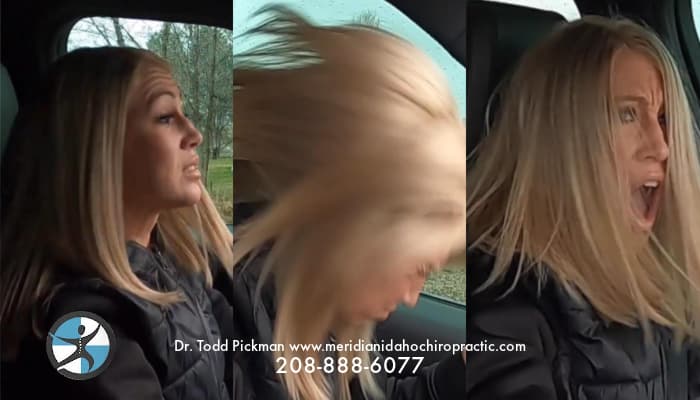
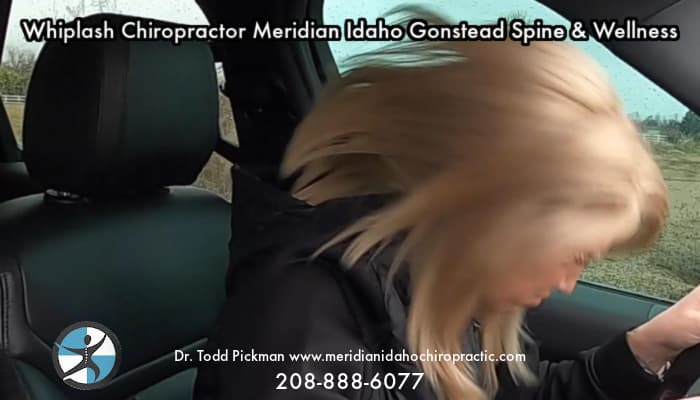
Imagine suffering from whiplash after a fender-bender on Fairview Avenue. A standard X-ray might show hidden injuries, but DMX captures the cervical spine’s abnormal motion during flexion and extension, guiding targeted interventions. Their large x-ray facility, one of the biggest in any chiropractic office nationwide, houses this advanced equipment for comprehensive analysis.

Dr. Todd Pickman’s Expertise in Gonstead Technique and DMX

Leading the charge is Dr. Todd Pickman at Meridian Idaho Gonstead Chiropractic, a chiropractor trained in the internationally respected Gonstead Technique. With years of experience, Dr. Pickman integrates DMX findings into precise adjustments, ensuring safe, specific corrections. His clinic’s commitment to Gonstead analysis—focusing on full-spine imaging and postural correction, elevates patient outcomes.

Dr. Pickman’s firsthand approach emphasizes patient empowerment. He reviews DMX videos with you, explaining subtle movements like atlanto-axial instability that could cause headaches or vertigo. While the medical field chooses to look elsewhere for the reason you or a loved one are suffering headaches, Dr. Pickmans’ approach is to look to where the base of your skull, or your occiput, sits with the first cervical vertebra (C1), also referred to as your atlas vertebra. This transparency builds trust, as seen in their service to communities around Settlers Bridge Park and Lake Lowell, where outdoor enthusiasts seek relief from activity-related strains.

The clinic’s reliability shines through their exclusive DMX adoption. While most providers use still images, they capture real spinal function and combine it with Chiropractic BioPhysics (CBP) to help maintain good posture and provide non-surgical spinal decompression for disc problems. This holistic expertise positions them as Meridian’s top choice for complex health issues.

How is DMX integrated into the treatment process?

The treatment journey at Meridian Idaho Gonstead Spine & Wellness Chiropractic begins with a thorough consultation. Patients from nearby shopping centers like The Village at Meridian share their history—perhaps sciatica from hiking at Eagle Island State Park. Dr. Pickman then orders DMX imaging, which is located at his clinic.

During the scan, you perform natural motions: forward flexion, extension, lateral bending, and rotation. The DMX records up to 30 frames per second, generating a motion study that highlights instability. For instance, in whiplash cases common after accidents on Idaho Highway 16, DMX reveals hypermobility in the upper cervical spine, which static X-rays overlook.

Next, findings integrate with Gonstead analysis. High-definition images inform hand-crafted adjustments targeting subluxations. Customized plans may include spinal decompression for herniated discs or rehab exercises tailored to your lifestyle, whether commuting via Highway 16 or parenting near Meridian High School.

This process yields measurable results. Patients report faster pain relief and improved mobility, thanks to data-driven care. Unlike generic adjustments, DMX ensures precision, reducing retreatment needs and enhancing long-term wellness.

Benefits of DMX Over Traditional X-rays

Traditional X-rays offer a static snapshot, missing dynamic dysfunctions. DMX, however, provides functional insights: it detects ligament damage, disc degeneration in motion, and postural shifts under stress. Radiation is minimal—up to 10 times less than film X-rays—making it safe for repeat use.

In Meridian’s active community, from runners at Kleiner Park to desk workers in Ten Mile Crossing offices, DMX uncovers hidden issues like facet joint syndrome during actual movement. This leads to accurate diagnoses for conditions such as chronic neck pain or post-injury instability.

Comparative advantages include faster processing (immediate results) and superior clarity from digital tech. Paired with Gonstead’s specificity, it outperforms competitors who rely on rest-only imaging. Patients experience empowered care, with clear explanations fostering adherence.

Real Patient Outcomes and Case Studies

Consider a typical case: a Caldwell resident with persistent low back pain after a slip near the Boise River. DMX revealed L5-S1 instability during flexion, invisible on standard X-rays. Gonstead adjustments and decompression resolved symptoms in weeks, restoring golf outings at Quail Hollow.

Another example involves a mother with migraines. DMX showed upper cervical hypermobility linked to poor posture from childcare near Star River Park. Targeted care eliminated headaches, showcasing DMX’s role in corrective chiropractic care leading to a natural state of wellness.

These stories, drawn from the clinic’s extensive experience, highlight DMX’s impact. With services extending to Middleton and Kuna, they serve Southwest Idaho comprehensively, boasting high patient satisfaction through proven, innovative methods. Check our rave reviews here.

GEO-Specific Relevance in Meridian, Idaho

Meridian Idaho Gonstead Spine & Wellness Chiropractic thrives in this vibrant city, proximate to landmarks like Roeding Park and the Meridian Dairy Days monument site. Their DMX tech aids locals from Cherry Lane shopping district or those navigating Eagle Road traffic, addressing strains from daily life.

Near universities like College of Western Idaho, students benefit from quick assessments for study-induced posture issues. Families around Silverhawk Elementary appreciate family-friendly scheduling for sports injuries from fields at Settlers Park.

Why Choose This Clinic for DMX-Guided Care?

Their edge lies in integration: DMX + Gonstead + decompression = optimal results. As Idaho’s sole DMX provider, they offer unmatched precision. Patient education, minimal radiation, and customized rehab distinguish them, especially for Boise-area athletes or commuters.

Expanding on this, the clinic’s massive x-ray suite enables multi-angle views, supporting complex analyses. This facility, unparalleled nationally, underscores their commitment to excellence.

Frequently Asked Questions

What is Digital Motion X-ray (DMX) at Meridian Idaho Gonstead Chiropractic?

Digital Motion X-ray (DMX) is an advanced imaging technology exclusive to Meridian Idaho Gonstead Spine & Wellness Chiropractic in Idaho. It captures real-time video of your spine and joints in motion, unlike static X-rays that only show rest positions. During the exam, patients perform natural movements like bending and twisting while high-resolution digital sensors record up to 30 frames per second. This shows problems that aren’t visible in regular X-rays, like loose ligaments, unstable joints, and misalignments that are important for making With reduced radiation and immediate results, DMX empowers precise, tailored treatments for conditions like whiplash or chronic pain common in Meridian’s active population near parks like Anderson Park. Dr. Todd Pickman uses these insights to craft individualized care plans, enhancing recovery speed and long-term spinal health.

How does DMX differ from traditional chiropractic X-rays?

Traditional X-rays provide a single, static image of the spine at rest, often missing functional problems that appear only during movement. In contrast, DMX at Meridian Idaho Gonstead Chiropractic offers dynamic, video-based imaging under load, spotting issues like facet syndrome or disc shifts invisible statically. Their digital system provides clearer images using much less radiation, processes them instantly, and works well with Gonstead analysis for precise adjustments. This technology helps people in areas like Eagle and Kuna by providing thorough evaluations for posture problems or recovery from injuries, doing a better job than older methods used in other places Patients gain more profound insights, leading to more effective, customized wellness plans that address root causes rather than symptoms.

Is DMX safe and low-radiation for Meridian patients?

Yes, DMX at Meridian Idaho Gonstead Spine & Wellness Chiropractic prioritizes safety with modern digital sensors that expose patients to up to 10 times less radiation than traditional film X-rays. The process is quick, noninvasive, and uses brief fluoroscopy bursts during motion. Dr. Pickman’s team explains protocols, ensuring comfort for all ages, from families near Meridian High School to seniors at local rec centers like Roeding Park. This low-dose approach allows repeat imaging if needed for progress tracking, without health risks. Combined with Gonstead precision, it delivers trustworthy diagnostics, building confidence in their exclusive Idaho service.

What conditions does DMX help diagnose in Gonstead care?

DMX excels at diagnosing motion-related issues like whiplash, cervical misalignments, herniated discs, sciatica, and postural abnormalities treated at Meridian Idaho Gonstead Chiropractic. It visualizes instability during flexion or rotation, ideal for post-accident care common on I-84 or sports injuries from exercising at Eagle Island State Park. By revealing functional deficits, it guides Gonstead adjustments, spinal decompression, and CBP rehab. Patients from Star, Eagle or Middleton report relief from chronic pain once overlooked, proving DMX’s value in comprehensive chiropractic evaluations.

How long does a DMX scan take at the clinic?

A DMX scan at Meridian Idaho Gonstead Spine & Wellness Chiropractic typically lasts 5-10 minutes, capturing multiple views efficiently. You’ll perform guided movements while the system records, followed by immediate review with Dr. Pickman. This speed minimizes wait times for busy Meridian residents near The Village shopping or Ten Mile Road offices. Post-DMX, detailed analysis integrates into your Gonstead plan within the same visit, streamlining care and accelerating treatment starts.

Can DMX be used for children in Meridian, ID?

Absolutely, DMX is safe and adaptable for pediatric patients at the clinic, with adjusted protocols for lower radiation and shorter exposures. It helps diagnose scoliosis progression or sports strains in kids from schools like Silverhawk Elementary. Dr. Pickman’s gentle Gonstead approach, informed by DMX, supports growing spines without invasive measures, promoting early intervention for Meridian families enjoying parks like Settlers Park.

Does insurance cover DMX at Gonstead Spine & Wellness?

Many insurance plans cover DMX as diagnostic imaging when medically necessary, especially for auto accidents or chronic conditions. The Meridian Chiropractic team team verifies your insurance benefits upfront, maximizing coverage for locals from Boise to Caldwell. Contact them for personalized guidance, as their expertise ensures proper documentation for claims tied to Gonstead treatments.

How does DMX improve Gonstead adjustment accuracy?

DMX provides dynamic data that refines Gonstead Technique precision at Meridian Idaho Gonstead Chiropractic. By showing exact motion patterns, Dr. Pickman targets subluxations with hand-specific adjustments, avoiding guesswork. This leads to faster resolutions for pain from daily activities around Lake Lowell or highway commutes, enhancing overall efficacy.

Is DMX available for auto injury cases in Nampa area?

Yes, their DMX service extends to Nampa and neighboring areas like Kuna, ideal for whiplash or soft-tissue injuries from Fairview Avenue accidents. As Idaho’s only provider, it documents dynamic damage for legal and treatment purposes, paired with decompression for optimal recovery. We have patients traveling from all corners of the state to have digital motion X-rays performed. The DMX diagnostics are a real game changer.

What results can patients expect from DMX-guided treatment?

Patients often see significant pain reduction within weeks, improved mobility, and prevented chronic issues. DMX-informed Gonstead care at the clinic yields measurable posture corrections and function gains, as evidenced by locals resuming activities at Kleiner Park or Quail Hollow Golf. Long-term, it promotes spinal health through personalized rehab.

Conclusion: Elevate Your Wellness with DMX Today

Meridian Idaho Gonstead Spine & Wellness Chiropractic’s use of Digital Motion X-ray sets them apart, offering Meridian residents precise, motion-based care. Schedule your assessment to experience this Idaho-exclusive innovation.

⚠ Read This Carefully — It Could Save You Months (Or Years) Of Frustration ⚠

If You’ve Tried “Everything” And You’re Still Dealing With Pain, Stiffness, Or Unanswered Questions… It’s Time For A Different Level Of Diagnostic Certainty. 🩺

At Meridian Idaho Gonstead Spine & Wellness Chiropractic, we don’t guess. We Measure. We Verify. We Prove. Using Idaho’s Only Digital Motion X-Ray, we uncover the hidden spinal instabilities and ligament injuries that standard imaging flat-out misses — then build a Precision-Based Care Plan designed around your spine, your injury, and your life.

Call Us Today  (208) 888-6077

No Drugs. No Surgery. No One-Size-Fits-All Treatment Plans.
Just Clarity, Confidence, And A Path Forward — backed by objective imaging and decades of clinical experience.

👉 If You Want Real Answers — Not More Appointments — This Is Your Next Step.
📋 Schedule Your Consultation Today and discover what your spine is actually doing when it moves.  208-888-6077


from
https://meridianidahochiropractic.com/how-meridian-id-gonstead-chiropractic-uses-digital-motion-x-ray/

Monday, November 25, 2024

Car Accident Chiropractor Dr. Todd Pickman

Understanding the Role of a Car Accident Chiropractor in Meridian, Idaho: A Case Study

Many individuals overlook the importance of specialized care after a car accident. A car accident chiropractor in Meridian, Idaho, can provide vital assessments and treatments that often go unnoticed in emergency rooms. This blog will explore a real-life case to illustrate the significance of chiropractic care after a vehicular accident.

Table of Contents

Introduction to the Case

This case revolves around a 29-year-old woman, referred to as CM, who experienced significant pain after being rear-ended while stopped in traffic. Despite her initial lack of severe symptoms, the aftermath of the accident revealed underlying issues that were not addressed during her emergency room visit.

Image of Car Accident Chiropractor Whiplash Victimw

The Accident: A Shocking Encounter

CM was waiting in traffic, aware of the distracted drivers around her. Suddenly, she was jolted forward as a large SUV crashed into her smaller vehicle. The impact was unexpected, and she found herself in disbelief. Although her body was thrown forward, she felt relatively unharmed at that moment. However, this incident would lead to a series of physical challenges.

Image of Car Accident Chiropractor Whiplash

Initial Reactions and Symptoms

After the accident, CM felt a bit sore in her neck and upper back, along with tightness in her lower back and pelvis. Initially, she dismissed these symptoms, thinking they were minor. However, as days turned into weeks, the discomfort intensified, prompting her to seek medical evaluation.

Image with text Emergency Room Visit After Car Crash

Emergency Room Visit: What Was Missed?

During her visit to the emergency room, CM underwent X-rays, which returned normal results. The ER staff briefly examined her neck and prescribed painkillers and muscle relaxers. However, they failed to recognize the potential long-term impact of her injuries, setting the stage for ongoing discomfort.

image with text Pain Medication following Emergency Room Visit

Chiropractic Evaluation: A Different Approach

Three weeks post-accident, CM sought help from a chiropractic clinic after hearing about its benefits from her sister. The chiropractic evaluation revealed severe tenderness in her neck, specifically in the atlanto-dental and mid-cervical areas. Unlike the emergency room assessment, the car accident chiropractor conducted a thorough examination, uncovering issues that the ER had overlooked.

image of Meridian Idaho Dr. Todd Pickman Car Accident Chiropractor

Understanding the Spine’s Role

The spine plays a crucial role in both mobility and protection. It not only supports the body but also shields the spinal cord and nerve roots from injury. Understanding the anatomy of the spine and its functions is essential for recognizing the implications of trauma, such as that suffered by CM. The intricate network of nerves that branch from the spine connects the brain to the entire body, making spinal health paramount.

Importance of Comprehensive Care

This case illustrates the vital role of a car accident chiropractor in Meridian, Idaho. While emergency rooms may provide immediate care, they often miss the subtler signs of injury. A specialized chiropractic evaluation can reveal hidden injuries and provide a more complete treatment plan, addressing both symptoms and root causes.

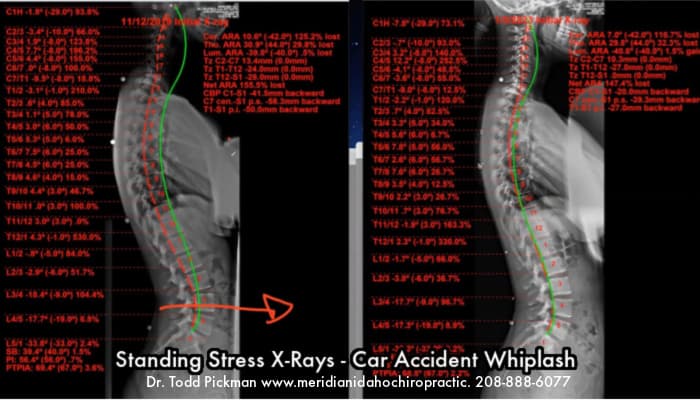
Image with text Standing Xray from Car Accident Chiropractor

Advanced Imaging Techniques: Weight Bearing X-Rays

Traditional X-rays may not provide a complete picture when assessing injuries following a car accident. Weight-bearing X-rays are essential as they capture the spine’s alignment and integrity under the stress of gravity. This imaging technique allows chiropractors to analyze how the spine behaves when the patient is standing, which can reveal issues that are not visible in standard supine X-rays.

Benefits of Weight-Bearing X-Rays

  • Comprehensive Assessment: They provide a more accurate depiction of spinal alignment.
  • Dynamic Analysis: This technique helps identify instability or misalignments that occur during normal activities.
  • Guided Treatment: Results from these X-rays inform targeted treatment plans for better recovery outcomes.

Dynamic Imaging: Digital Motion X-Ray

Digital Motion X-ray (DMX) is a groundbreaking imaging technique that captures the spine in motion. This method records 30 frames per second, allowing chiropractors to observe how the spine moves during various activities. This is crucial for identifying injuries that static images might miss.

Advantages of Digital Motion X-Ray

  • Real-Time Analysis: DMX provides instant feedback on spinal movement, highlighting areas of concern.
  • Identification of Compromised Ligaments: It can reveal ligament injuries that may lead to excessive motion between vertebrae.
  • Enhanced Treatment Protocols: Findings from DMX guide chiropractors in creating personalized rehabilitation plans.

The Importance of Accurate Diagnosis

Accurate diagnosis is pivotal for effective treatment following a car accident. Misdiagnosis or overlooked injuries can lead to chronic pain and long-term complications. Dr. Todd Pickman, Meridian, Idaho’s premier car accident chiropractor, utilizes advanced imaging techniques to identify and treat all injuries appropriately.

How Accurate Diagnosis Impacts Recovery

  • Prevention of Chronic Pain: Early identification of injuries can help prevent ongoing discomfort.
  • Tailored Treatment Plans: A thorough diagnosis allows customized care that addresses specific needs.
  • Improved Patient Outcomes: Patients who receive accurate diagnoses and appropriate care tend to recover faster and more completely.

After an accident, navigating insurance claims can be daunting. Working with an attorney who understands personal injury law is crucial. They can help ensure that your rights are protected and that you receive fair compensation for your injuries.

Key Legal Considerations

  • Documentation: Keep detailed records of all medical evaluations and treatments.
  • Insurance Claims: An attorney can assist in dealing with insurance companies that may downplay your injuries.
  • Legal Representation: A lawyer can ensure you are adequately compensated for current and future medical expenses.

Image of Meridian Idaho Car Accident Chiropractor Clinic

Conclusion: The Path to Recovery

Recovering from a car accident is a multifaceted process that involves thorough evaluations, accurate diagnoses, and appropriate treatment. A car accident chiropractor in Meridian, Idaho, can play a vital role in this journey, helping patients navigate their recovery with tailored care plans and support.

FAQs about Chiropractic Care After an Accident

What should I do immediately after an accident?

Seek medical attention to assess any injuries, even if they seem minor. Follow up with a chiropractor for a specialized evaluation.

How long does chiropractic treatment take?

The duration of treatment varies based on the severity of injuries and individual recovery rates. Most patients see significant improvement within a few weeks.

Will my insurance cover chiropractic care?

Many insurance plans do cover chiropractic services, particularly if they are related to accident injuries. Always check with your provider for specific coverage details.

Can chiropractic care help with long-term pain management?

A car accident chiropractor can provide ongoing care and strategies to manage pain effectively, improving overall quality of life.

Car Accident Chiropractor Meridian Idaho

If you or a loved one has been involved in a car accident in Meridian, Idaho, or anywhere in the state, seeking proper care is critical to your recovery and long-term health. At Meridian Idaho Gonstead Spine & Wellness, Dr. Todd Pickman, DC, offers expert chiropractic care using advanced diagnostics like Digital Motion X-ray (DMX) to uncover hidden injuries that may otherwise go undetected. Whether you’re experiencing neck pain, back pain, or persistent discomfort after an accident, early intervention can make all the difference.

Contact us today at (208) 888-6077 or visit our clinic at 3085 East Magic View Drive, Suite #180, Meridian, ID 83642, to schedule a consultation. Let us help you regain your health, restore your mobility, and get back to living pain-free. Your recovery matters to us.


Click To Contact


from
https://meridianidahochiropractic.com/car-accident-chiropractor-dr-todd-pickman/

from
https://meridianidahogonsteadchiropractic.blogspot.com/2024/11/car-accident-chiropractor-dr-todd.html

from
https://marcelinakirby.blogspot.com/2024/11/car-accident-chiropractor-dr-todd.html

from
https://douglasclark0.blogspot.com/2024/11/car-accident-chiropractor-dr-todd.html

Tuesday, November 12, 2024

Car Collision Injury Chiropractor

Choosing the Right Meridian Idaho Car Collision Injury Chiropractor

Greetings. I am Dr. Todd Pickman, a car collision injury chiropractor with more than 20 years of experience treating patients injured in auto accidents in Meridian, Idaho.

The other day, I decided to search Google on “How Do I Choose A Car Accident Chiropractor In Meridian?” The top 10 searches had articles with questions you should ask your chiropractor when seeking chiropractic care for car crash injuries. When I first saw the questions to ask, I thought, WOW, those are a lot of questions.

So, I decided to save you some time and create an article with all the answers to those questions. I hope these answers are what you are looking for and save you a lot of time. If you or a loved one have been injured in an auto accident in Treasure Valley, give me a call (208) 888-6077 and we will get you an appointment right away.

Top 10 FAQs To Choose A Car Collision Injury Chiropractor In Meridian, Idaho

Here are the top 10 Questions I found that you should ask your potential auto accident injury chiropractor derived from my search:

  1. Why is chiropractic care beneficial for car accident recovery with a car collision injury chiropractor?
  2. How can reading reviews and testimonials help you choose a reliable auto accident injury chiropractor?
  3. How necessary are a car crash chiropractor’s credentials, and what should you look for?
  4. What specific training and vetting should a car accident chiropractor undergo for treating accident-related injuries?
  5. Why is experience with car accident injuries critical when choosing an auto accident injury chiropractor?
  6. What chiropractic techniques does a car collision injury chiropractor typically employ for recovery?
  7. What should you expect during a free consultation with a car crash chiropractor?
  8. How does an auto accident injury chiropractor handle payment on a lien basis for accident victims?
  9. What should you ask about fees and payment options with a car accident chiropractor?
  10. What can you expect during your first visit with a car accident chiropractor?

Car Crash Scene in Meridian Idaho with text Choosing the Right Meridian car collision injury chiropractor.

A Comprehensive Guide by Dr. Todd Pickman: Choosing the Right Meridian Car Collision Injury Chiropractor:

Experiencing lingering pain or discomfort after a car accident can be overwhelming. Choosing the right chiropractor is crucial to your recovery, as chiropractic care offers a non-invasive, medication-free approach, especially effective for car accident-related injuries like whiplash, back pain, joint injuries, and muscle strains. With over 20 years of experience, Dr. Todd Pickman and his team at Meridian Idaho Gonstead Spine & Wellness are dedicated to helping you understand what to look for in a car collision injury chiropractor. Following the tips outlined here, you can be confident in your choice and find the best care for your health and recovery needs.

Why Chiropractic Care for Car Accident Recovery?

Car accidents can cause injuries that disrupt daily life, often without immediate symptoms. Chiropractic treatment is instrumental in detecting these hidden injuries early and providing targeted care that relieves pain, restores mobility, and supports the body’s healing process. Working with a chiropractor can help address underlying injuries and prevent them from developing into chronic conditions.

We are fully committed to your recovery at Meridian Idaho Gonstead Spine & Wellness. With seven conveniently located clinics across the Meridian Valley and Henderson, Nevada, our team can provide top-notch chiropractic care when and where you need it most.

Image of Dr. Pickman with text statement Essential Tips for Choosing the Right Chiropractor Meridian

Essential Tips for Choosing the Right Car Crash Chiropractor In Meridian, Idaho

  1. Check Reviews and Testimonials

Reading reviews is an excellent starting point when looking for a reliable chiropractor. Reviews offer insights into other patients’ experiences and the expected quality of care. Google reviews are beneficial as they are accessible and transparent. Look for patterns in reviews, such as mentions of effective treatment, caring staff, and a welcoming clinic environment.

At Meridian Idaho Gonstead Spine & Wellness, we are proud of our high patient satisfaction rates. Patients frequently recommend our compassionate approach, personalized care, and commitment to helping them recover comfortably and efficiently. With over 230 five-star reviews, our dedication to patient care speaks volumes.

  1. Research the Chiropractor’s Credentials

A chiropractor’s credentials are a vital indicator of their level of training, expertise, and reliability. It’s essential to verify that your chiropractor has the proper licensure and qualifications to practice in Idaho, which ensures they have completed the education and training necessary to provide quality care. Additionally, check for any history of malpractice or disciplinary actions to ensure you’re choosing a trustworthy provider.

At Meridian Idaho Gonstead Spine & Wellness, Dr. Todd Pickman holds all the necessary credentials and ensures that each chiropractor on his team is fully vetted and rigorously trained. Our chiropractors have the same credentials but undergo comprehensive training in examination protocols, including orthopedic and neurological assessments, under the tutelage of Dr. Pickman. They are well-versed in determining when to order X-rays or MRIs. They are thoroughly educated in car accident treatment protocols, re-examination procedures, and proper legal documentation for accident injury cases. Our chiropractic team is also trained to know when a second opinion is necessary and is well-prepared to collaborate with medical doctors and personal injury attorneys, specifically when dealing with legal depositions and courtroom testimony. You will be happy to hear that my staff of car collision injury chiropractors and chiropractic assistants are so well trained in chiropractic car wreck treatment and legal documentation that our auto accident injury victims rarely, if ever, have to go to court.

  1. Ask About Experience with Car Accident Injuries

When speaking with a prospective car crash, collision and accident chiropractor, ask about their experience treating car accident injuries. Inquire whether they’ve handled cases similar to yours and if they have experience with specific conditions you may have, such as joint injuries or herniated discs. Experience matters significantly when selecting a chiropractor, particularly for car crash injuries. The more experience a chiropractor has in treating these specific injuries, the better equipped they are to provide effective car collision injury chiropractor care. Motor vehicle accident injuries can lead to complex issues such as whiplash, back and neck pain, and even nerve damage. A chiropractor specializing in car accident recovery, like Dr. Pickman, understands the unique challenges of these injuries and knows how to address them effectively.

For over 20 years, our clinics have served countless car crash, collision, and accident victims, building a wealth of experience in managing a variety of accident-related injuries.

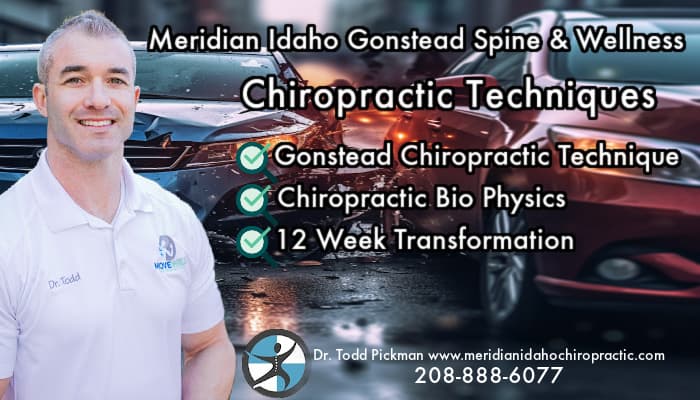
image of Auto Collision Accident with Meridian Idaho Gonstead Spine & Wellness Chiropractic Techniques by Todd Pickman car collision injury chiropractor.

  1. Ask About Chiropractic Techniques Used

Chiropractic care encompasses various techniques, and understanding which ones are offered can help you select a chiropractor that best suits your needs. Common chiropractic techniques for car accident recovery include:

Manual Adjustments: A hands-on technique that involves adjustments to realign the spine and joints, alleviating pain and restoring mobility.

Soft Tissue Therapies: These treatments, including massage and myofascial release, target muscles, tendons, and ligaments to relieve pain and tension.

Spinal Manipulation: Designed for spinal misalignments, spinal manipulation uses controlled thrusts to improve alignment, reduce nerve irritation, and alleviate pain.

Gonstead Chiropractic Technique

Dr. Todd Pickman at Meridian Idaho Gonstead Chiropractic uses the Gonstead Chiropractic Technique, which offers a precise method of spinal adjustment. By assessing specific spinal segments, Dr. Pickman can pinpoint misalignments and apply adjustments tailored to the unique needs of each patient. This meticulous technique is highly effective in relieving nerve pressure, reducing pain, and restoring proper spinal function, especially for those suffering from chronic pain or recent car accident injuries.

Chiropractic BioPhysics (CBP)

Chiropractic BioPhysics (CBP) is an advanced method that emphasizes correcting postural distortions and improving spinal alignment for long-term health benefits. Dr. Pickman integrates CBP to target the root causes of pain and dysfunction, offering customized treatment plans for issues like poor posture and spinal misalignment. By focusing on spinal structure and balance, CBP enhances mobility, reduces pain, and optimizes nerve function, making it highly effective for patients seeking lasting relief from car accident injuries and chronic conditions.

Rehabilitative Exercises for Car Accident Injuries

Dr. Pickman’s rehabilitative exercise programs are designed to support healing after a car accident by rebuilding strength and enhancing flexibility. These targeted exercises help to restore muscle function, stabilize injured areas, and improve the body’s natural movement patterns. Through individualized exercise plans, patients can regain mobility, reduce pain, and prevent future injuries, ensuring a comprehensive and sustainable approach to recovery and wellness.

Each technique offers unique benefits; often, a combination is most effective for comprehensive recovery. Meridian Idaho Gonstead Spine & Wellness provides a wide range of treatments tailored to each patient’s specific needs. During your consultation, we’ll discuss these techniques in detail to determine the best approach for your recovery.

Image of A Meridian Car Collision Accident with text Schedule a Free Consultation Today Car Crash Chiropractor Meridian Idaho

  1. Ask To Schedule a Free Consultation

A free consultation is a valuable opportunity to meet with a chiropractor, discuss your symptoms, and assess whether their treatment approach aligns with your goals. During the consultation, you can ask about the chiropractor’s experience, techniques, and the types of injuries they commonly treat. This is also a chance to gauge your comfort level with the chiropractor and their staff.

Everyone you talk to, from the receptionists to the chiropractic assistants, and the Doctor of Chiropractic at Meridian Idaho Gonstead Spine & Wellness, understands the importance of this first step in recovery. We offer free consultations, allowing you to ask questions and understand our approach to your treatment. You won’t need to worry about out-of-pocket expenses if you are a not-at-fault accident victim. Our care is provided on a lien basis, meaning we wait until your case is settled and payment is handled directly through your attorney. This lets you focus entirely on your recovery without the added financial stress.

  1. Understand the Fees and Payment Options

Chiropractic care for car accident injuries is typically covered by auto insurance, especially if your injuries resulted from an car wreck in the Meridian Valley. During your free consultation, it’s essential to inquire about the cost of services, any potential co-pays, and what your insurance will cover.

At Gonstead Spine & Wellness of Meridian Idaho, our team works with attorneys on a lien basis. This arrangement ensures that you won’t be held responsible for the bills immediately, allowing you to focus on healing without financial worries.

  1. Conducting a Background Check and Interviewing Your Chiropractor

After gathering information on potential chiropractors, the next step is to conduct interviews. You may choose to do this over the phone or in person. During these interviews, pay attention to how the chiropractor answers your questions. An experienced chiropractor should be able to explain their treatment plans, experience, and approach to patient care clearly and reassuringly.

Once you’ve shortlisted potential chiropractors, conducting a brief interview can give valuable insights into their expertise and approach. At Meridian Idaho Gonstead Chiropractic, Dr. Todd Pickman encourages patients to ask questions about his experience, specific treatment techniques like Gonstead and Chiropractic Biophysics (CBP), and the personalized care approach he provides. Whether over the phone or in person, these discussions can help you gauge Dr. Pickman’s commitment to addressing your unique needs and ensuring a supportive recovery journey.

  1. What is your approach to long-term care?

Do you suggest any lifestyle or exercise recommendations to support my recovery?

At Meridian Idaho Gonstead Spine & Wellness, Dr. Pickman and his team take the time to understand each patient’s unique needs. We believe that establishing a strong rapport with our patients is crucial for successful recovery. By addressing your concerns and providing comprehensive answers, we aim to make you feel comfortable and confident in our care.

  1. What to Expect During Your First Visit

Once you’ve selected a chiropractor who meets your needs, it’s time for your first visit. Here’s what to expect:

Physical Examination: Dr. Pickman will start with a thorough physical exam, assessing your range of motion, reflexes, muscle strength, and any specific areas of pain. X-rays may be taken to gain insights into your bone structure and identify issues such as fractures or misalignments.

Stress X-Rays And Digital Motion X-Rays

Stress X-Rays And Digital Motion X-Rays will be performed during your first visit to Meridian Idaho Chiropractic with Dr. Todd Pickman. You’ll experience a thorough assessment using advanced imaging technology, including stress and digital motion X-rays (DMX). Stress X-rays are specialized images taken in various positions, allowing Dr. Pickman to evaluate your spine’s movement limits. This is crucial for identifying issues like ligament injuries that may not be visible when the body is at rest. Digital Motion X-ray, on the other hand, captures real-time video X-rays of your spine in motion, revealing any abnormal joint movement or misalignment that may have resulted from a car accident or other trauma. DMX is especially valuable for diagnosing hidden injuries because it shows how each vertebra interacts with the one above and below it during motion, a feature impossible with static X-rays.

As the only healthcare facility in Idaho to offer digital motion X-rays, Dr. Pickman’s clinic provides a unique advantage for patients seeking comprehensive care for car accident-related injuries. These dynamic imaging tools allow for a precise diagnosis, enabling Dr. Pickman to pinpoint specific areas of instability or dysfunction within the spine. By understanding exactly how your spine moves under stress, Dr. Pickman can create a targeted and effective treatment plan to promote healing, reduce pain, and restore mobility. The insights gained from these X-rays support a tailored approach to your recovery, ensuring that no underlying issues are missed and that your treatment is as effective as possible from the very beginning.

Personalized Treatment Plan: Dr. Pickman’s team will design a customized treatment plan for your injuries and set goals based on your exam and medical history. This plan may include manual adjustments, soft tissue therapy, and spinal manipulation.

First Adjustment: If appropriate, we may perform your first adjustment during this visit. Adjustments are performed on a specially designed chiropractic table and can provide immediate relief from pain and stiffness.

Follow-Up Sessions: Dr. Pickman may recommend multiple sessions depending on your injuries and pain level. Severe or chronic pain often requires weekly sessions initially, tapering to monthly appointments as you recover.

Image of car accident with text Why Choose Meridian Idaho Gonstead Spine & Wellness

  1. Why Choose Meridian Idaho Gonstead Spine & Wellness?

With over 20 years of experience, Meridian Idaho Gonstead Spine & Wellness is a trusted source for car accident recovery in Meridian and Henderson. Our location makes it easy to find a nearby clinic, no matter where you are in the valley. We understand that each injury and patient is unique, so we take a personalized approach to every case.

Dr. Pickman and his team prioritize patient-centered care, offering a welcoming, supportive environment where you can focus on healing. Our extensive experience with car accident injuries enables us to provide tailored solutions that address both immediate symptoms and the underlying causes of pain.

Take the First Step Toward Recovery

If you’re dealing with pain, limited mobility, or other symptoms after a car accident, chiropractic care may be exactly what you need. At Meridian Idaho Gonstead Spine & Wellness, we are dedicated to helping you regain your health, mobility, and quality of life. With seven locations across Treasure Valley, we provide convenient and effective care when you need it most.


from
https://meridianidahochiropractic.com/car-collision-injury-chiropractor/

from
https://meridianidahogonsteadchiropractic.blogspot.com/2024/11/car-collision-injury-chiropractor.html

from
https://marcelinakirby.blogspot.com/2024/11/car-collision-injury-chiropractor.html

from
https://douglasclark0.blogspot.com/2024/11/car-collision-injury-chiropractor.html

Is Spinal Decompression Safe in Meridian Idaho? Expert Guide

Our Clinic’s Expertise: Years of Trusted Care At Meridian Idaho Gonstead Spine & Wellness Chiropractic, our team brings dee...